




The problem
AI always has an answer. The answer needs context.

An answerThe answerNowWith the Standard
This ad set is performing wellonly half as strong as it looks. It drove 1,200 clicks last month at a cost per click well under benchmark. Your most engaged account is Stealth AI Startup“Stealth AI Startup”, a placeholder employer, with 600 of them, so I’d prioritise them for outreach this weekdrop it and rank the real accounts against your CRM first.
What it didn’t catch
- You’ve reported a win that isn’t one. Half those clicks came from one placeholder employer. Take them out and the ad set looks very different.
- Your best account doesn’t exist. “Stealth AI Startup” is what people list when they won’t name their employer. No buyers, no budget.
- Sales loses a week to it. An SDR chases a company that can’t answer, while three accounts that were warming up wait.
Why it exists
What the Standard adds to your AI
-
The data
A clean signal before anything gets read
Campaign Manager exports, CRM reports and website data each sit at a different level (campaigns, people, companies) and over a different date range. The rules say which source answers which question and what to clean out first, so a placeholder employer never ends up as your best account.
-
The judgement
The calls practitioners make every week
When a low CPL is enough to move budget. When a drop in CTR means fatigue. When an audience is big enough to count as warm. Each call written down by someone who makes it every week on a real budget, so your AI makes it the same way.
-
The context
Your campaign’s own history as the benchmark
A frequency of 20 over 90 days is too much on a cold list and fine on retargeting. The rules carry that context, so your AI compares a campaign with its own past instead of an industry average.
-
The Standard
All of it comes from the people who run the accounts
Every rule, skill and scenario carries the name of the person who runs their accounts that way, and it is open for anyone to use.
Collection
How the Standard is built. Each part builds on the one before it, and it all starts with the rules
- Rules15 Start with the judgement AI is missing. When frequency is too high for an audience, when a CTR drop means fatigue, when an audience is big enough to count as warm. 15 rules to start Explore all 15 rules
- Skills29 Let AI apply the rules to your data. A skill pulls your numbers, reads them the way the rules say, and tells you what to change Explore all 29 skills
- Scenarios09 Turn routine work into one run. The Monday review across accounts, or the list of warm accounts for sales, done in one go. Each step is a skill, and each skill rests on a rule Explore all 9 scenarios
Every name here runs accounts. Every rule has a name on it.
You run an account a way that works. Send it
-
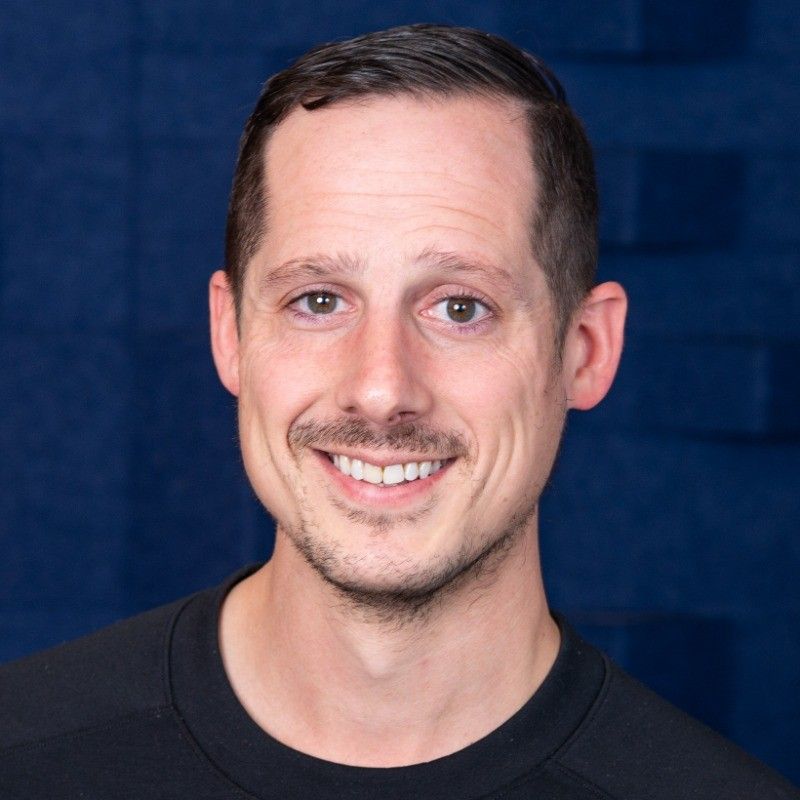 ImpactableFounder & CEO Justin Rowe Founder and CEO of Impactable, a LinkedIn-centered B2B demand agency that runs marketing ecosystems as one connected system. Specializes in signal-based targeting and account-level measurement tied to real deals and pipeline. 1 scenario
-
 Beyond The FunnelFounder Joshua Stout Founder of Beyond The Funnel, a B2B LinkedIn Ads agency. One of 80 LinkedIn Certified Marketing Experts worldwide, he has managed or overseen 1,000+ LinkedIn Ads accounts, helped scale a multimillion-dollar LinkedIn Ads service, and was Director of Advertising at Influent. 1 scenario
-
 GrowthMotivFounder & Principal Revenue Architect Jonathan Belliveau Built GrowthMotiv, which builds the tracking and account intelligence that tie B2B ad spend to closed revenue. Has spent fifteen years running paid budgets across B2C and B2B SaaS, and specialises in account-based marketing built on Apollo. 1 scenario
-
 B2LinkedFounder & CEO AJ Wilcox Runs B2Linked.com, a LinkedIn Ads agency and official LinkedIn Marketing Partner. Has run LinkedIn Ads since 2011, authored multiple courses for LinkedIn Learning, and hosts the LinkedIn Ads Show podcast. 1 skill
-
 CR8Founder Bogdan Liutic Runs CR8, a LinkedIn Ads agency that targets companies by their public buying signals. A performance marketer, he built two businesses to seven figures on performance marketing and sales, wrote the LinkedIn ads playbook for Kyle Poyar's Growth Unhinged, and won Clay's 2026 GTM hackathon. 1 scenario
-
 OtterFounder Ivars Krutainis Runs Otter, an agency that runs LinkedIn Ads only, for B2B SaaS companies. Handles strategy and execution on every account himself, from targeting and creative briefs to reporting. 1 skill
-
 FrontalPartner & Head of ABM Ivan Falco Leads ABM at Frontal, the B2B demand generation agency formerly known as ColdIQ Agency. Runs LinkedIn Ads and ABM programmes for tech companies, and publishes his own LinkedIn Ads skills for Claude. 1 skill